



15.4kviews
Introduction
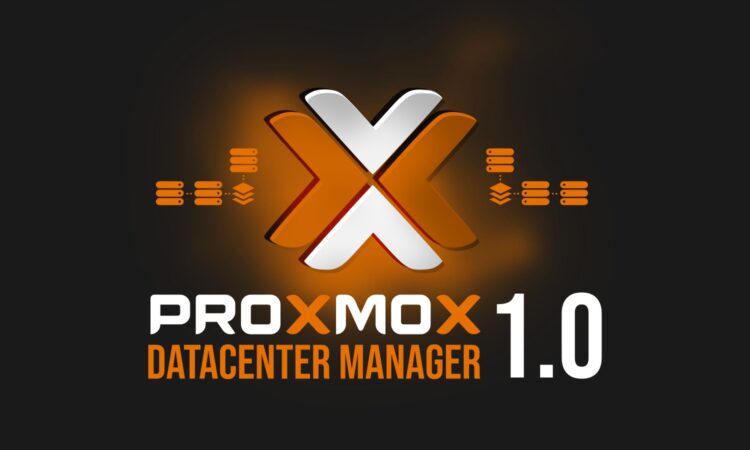
If you run more than one Proxmox VE cluster — or mix standalone nodes, backup servers, and remote datacenters — you have probably felt the pain of juggling multiple browser tabs just to get a handle on your infrastructure. Proxmox Datacenter Manager (PDM) was built to fix exactly that, and with the release of version 1.0, it has officially graduated from an experimental tool to a production-ready platform.
This post breaks down everything that landed in the PDM roadmap update published on March 19, 2026: from the headline EVPN Software-Defined Networking integration to the improved search syntax, concurrent metrics collection, Proxmox Backup Server integration, and the full list of GUI enhancements that make day-to-day multi-site management a genuinely pleasant experience.
Whether you are evaluating PDM for the first time or upgrading from the 0.9 BETA, this guide has you covered with a full breakdown in plain language.
Why Proxmox Datacenter Manager 1.0 Matters
Proxmox VE is already one of the most popular open-source hypervisor platforms among home lab enthusiasts and production infrastructure teams alike. But its management model has always been cluster-centric: each cluster gets its own web UI, its own credential set, its own view of the world. That works fine when you have one cluster. It scales poorly when you have five spread across three physical locations.
PDM directly addresses the “multiple tabs, multiple logins” problem by acting as a single pane of glass across all your Proxmox nodes and clusters — without requiring those nodes to be part of the same cluster. That last part is crucial. PDM works on single standalone nodes, too.
With the 1.0 release, PDM is no longer just a dashboard viewer. It is becoming a serious multi-site management tool with real SDN configuration capabilities, live VM migration between datacenters, and Proxmox Backup Server integration. That is a meaningful leap in scope.
Key Highlights — What’s New in PDM 1.0
Here is the short version of what the roadmap update and the 0.9 BETA release (the last milestone before 1.0) delivered:
- EVPN / SDN Integration: Create and manage EVPN Zones and VNets across multiple remote Proxmox VE clusters from a single UI — the biggest and most-requested feature on the roadmap.
- Cross-Datacenter VM Migration: Migrate virtual machines and containers between entirely different datacenters without requiring shared cluster networking — a true game-changer for distributed setups.
- Proxmox Backup Server Integration: PBS remotes can now be connected to PDM. CLI support landed in 0.9 BETA, with full GUI management on the way.
- Elasticsearch-Inspired Search: The new search syntax lets you filter by resource type, status, remote, and more — inspired by GitHub and Elasticsearch query languages.
- Concurrent Metric Collection: Metrics are now fetched from all remotes simultaneously instead of sequentially, dramatically improving dashboard freshness and load times.
- Trust on First Use (TOFU): Adding new remotes is now safer and more streamlined with TOFU fingerprint verification, mirroring how PVE cluster join was simplified years ago.
- RRD Graph Time Frames: Users can now select the displayed time range for RRD performance graphs — CPU, RAM, storage, and the new Pressure Stall Information (PSI) metrics for PVE 9 hosts.
- Multi-Language Support: PDM 0.9 ships with initial translations for 29 languages including Arabic, Chinese (Simplified and Traditional), German, Japanese, Korean, Russian, Turkish, and more.
- Task Summary Dashboard: A new tasks panel shows failed and recent tasks from the last 48 hours directly on the dashboard — no more hunting through logs.
- SDN Status Overview: A new panel in the dashboard shows the full SDN status report, with a tree view of all SDN zones and their status across all remotes.
Deep Dive: SDN and EVPN Integration
The SDN and EVPN integration is without question the most significant feature in the PDM roadmap. If you have ever tried to stretch Layer 2 networking across geographically separate Proxmox clusters, you know how painful the manual EVPN configuration process is — especially when dealing with VRFs, Route Targets, and VxLAN tunnel endpoints across multiple sites.
PDM 1.0 brings this under centralized control. Here is what the SDN feature set covers:
- EVPN Zone Overview: A new dedicated panel shows the state of all EVPN zones across every connected remote in one place.
- Cross-Cluster VNet Creation: Create EVPN VNets that span multiple remote clusters from the PDM interface without SSH-ing into each node individually.
- Multi-VRF Support: Configure and manage multiple VRFs (Virtual Routing and Forwarding instances) across clusters, enabling proper network segmentation between tenants or workloads.
- Automatic RT Import/Export: Route Target Import/Export configuration — historically a manual, error-prone task — is handled automatically, reducing the chance of misconfigured BGP policies.
- SDN Status Dashboard Panel: The main PDM dashboard now includes a live SDN status report panel so you can see the health of your overlay network at a glance.
For home lab users experimenting with multi-site setups, this feature alone makes PDM worth deploying. For production teams running distributed Proxmox infrastructure, it represents a significant reduction in operational complexity.
Deep Dive: The New Search and Filter Engine
One of the underrated improvements in PDM 0.9/1.0 is the overhauled search and filter system. If you manage dozens or hundreds of VMs across multiple clusters, finding a specific guest or set of guests quickly is critical.
The new search syntax is inspired by Elasticsearch and GitHub’s query language. This means you can construct compound queries like:
| # Find all running VMs on a specific remote type:vm status:running remote:cluster-a # Find all stopped containers type:ct status:stopped # Find any resource with ‘web’ in the name web type:vm,ct |
The search panel now auto-opens with pre-filled filters when you click certain dashboard panels, and a search icon has been added to the guest panel for discoverability. The search bar also has a clear button and closes automatically when you navigate to a result.
GUI and UX Improvements What Changed
Beyond the headline features, PDM 0.9 shipped a substantial list of UI polish items that collectively make the product feel much more production-ready. Some of the most impactful changes:
Remote Setup Wizard Enhancements
The process of adding a new remote (a Proxmox cluster or node) now includes automatic fingerprint probing with TOFU support, duplicate host detection to prevent adding the same endpoint twice, and smarter page reset logic when you change a previous step.
Node Overview and Updates Tab
The node overview has been restructured into a tabbed layout. A new dedicated tab shows available updates for each node, and a button now links directly to the remote’s upgrade page — so you can initiate patching from PDM without opening a separate browser tab.
Metrics and RRD Graphs
RRD graphs now include a user-selectable time frame control. PDM also displays new Pressure Stall Information (PSI) metrics for Proxmox VE 9 hosts, giving better visibility into CPU, memory, and I/O contention.
Storage Visibility
A list of all storages and their statuses is now shown in the resource tree for each Proxmox VE remote. Alert thresholds have been adjusted to 90% (warning) and 97.5% (critical) to reduce noise on well-utilized storage systems.
Backend and Performance Improvements
Most of the backend changes in PDM 0.9 focus on making the product more reliable and responsive at scale. The key improvements:
- Concurrent Metric Collection: All remotes are now polled simultaneously instead of sequentially. On setups with many remotes, this can cut dashboard refresh time from minutes to seconds.
- Persistent Metric State: Collection state is now saved to disk and reloaded after daemon restarts, meaning PDM no longer needs to rebuild its metric baseline from scratch after a reboot.
- Improved Remote Task Cache: The remote task cache has been resized and made more efficient, with smarter querying logic that avoids unnecessary API calls to remotes.
- Better Error Reporting: When fetching a remote fails, PDM now surfaces the root cause error instead of a generic top-level wrapper — making troubleshooting dramatically faster.
- Connection Tracking for Live Migrations: PDM now enables connection tracking when live migrating VMs, helping maintain stateful firewall and session continuity through the migration window.
- Metric Collection Insights: PDM now tracks and exposes how long each metric collection run takes, per-remote and overall, providing operational visibility into collection health.
Command Line Interface Enhancements
PDM’s CLI tooling received meaningful improvements in the 0.9 release:
- proxmox-datacenter-manager-client: Now supports querying status and RRD data directly from remotes via the CLI, enabling scripting and automation workflows.
- pdmAtoB upgrade script: A dedicated upgrade checking script makes the Alpha-to-Beta (and onward) upgrade path smoother and more reliable.
- Version display: The proxmox-datacenter-manager-admin utility can now display the currently running PDM version — a small but appreciated addition for support and troubleshooting.
What is Still on the Roadmap
With the release of PDM 1.0, the roadmap wiki page has been superseded by the official documentation at pdm.proxmox.com. But the broader roadmap vision — which was publicly tracked through the BETA cycle — outlined several features still in development or under evaluation:
- Active-Standby HA for PDM: Evaluate whether a native active-standby architecture makes sense to eliminate PDM as a single point of failure.
- Advanced ACL Schema: Improved permission handling with more granular access control, including limited views for specific users (showing only guest details, not node-level data).
- Notification System: Standard system and update notifications, with potential for PDM to act as a notification aggregation target for all connected remotes.
- Pool-View / Tag-View: A merged hierarchical pool view across all remotes and alternative views based on resource pools or tags.
- Console Access: Remote console access for guests and nodes directly from the PDM interface — eliminating the need to jump to individual cluster UIs for console sessions.
- Off-Site Replication: Replication copies of guests to remote locations for manual recovery in case of datacenter failure (distinct from HA).
- Bulk Actions: Bulk start, stop, and remote migration of groups of guests across remotes.
Version History at a Glance
| Release | Date | Key Milestone |
| 0.1 ALPHA | December 2024 | First public release; single pane of glass, basic VM management, remote migrations — Debian Bookworm base |
| 0.9 BETA | September 2025 | EVPN/SDN integration, PBS support, smart search, concurrent metrics, TOFU, 29-language UI — Debian Trixie base |
| 1.0 STABLE | March 2026 | Production-ready release; official docs at pdm.proxmox.com; roadmap wiki page retired |
Conclusion
Proxmox Datacenter Manager 1.0 represents a significant maturation of the Proxmox ecosystem. It is no longer just a monitoring dashboard — it is a centralized management plane for multi-site, multi-cluster Proxmox infrastructure. The EVPN integration alone moves it from “nice to have” to “operationally essential” for anyone running geographically distributed Proxmox setups.
The journey from the 0.1 ALPHA in December 2024 to the 1.0 stable release in March 2026 shows how quickly the Proxmox team can iterate when they have a clear problem to solve. The roadmap items still outstanding — console access, native HA for PDM itself, advanced ACL, bulk actions — suggest the tool will continue to grow substantially post-1.0.
add a comment

Proxmox Finally Has a Real RVTools-Style Report (This is What Was Missing)
Introduction If you spent any meaningful time in VMware environments, RVTools was likely one of the first utilities you installed...

Download Virtuozzo 9 ISO
Virtuozzo 9 is a powerful enterprise-grade virtualization and cloud platform designed for service providers, hosting companies, and enterprises. It combines...
Check Point R81.20 T634 for VMware
If you're running Check Point environments in production, staying updated with the latest Jumbo Hotfix is critical for security, performance,...

VMware Cloud Director 10.3.3 OVA Download
The VMware Cloud Director-10.3.3 appliance is a ready-to-deploy OVA package that allows users to quickly set up VMware Cloud Director...