


9views
VitruvianOS 0.3 has officially been introduced as the project’s first version available to the public. The development team describes it as a pilot release, offering an early look at the system’s direction. It is built on the Linux kernel and draws design inspiration from both Haiku OS and BeOS.
Development of VitruvianOS started back in 2019, and this 2026 release represents a working foundation rather than a polished, production-ready operating system. Since the project is still relatively unknown, it’s worth briefly explaining what makes it unique.
Unlike conventional Linux distributions, VitruvianOS does not rely on the typical Linux userland or desktop environment. Instead, it uses the Linux kernel strictly for hardware compatibility while introducing its own custom-built system components. The aim is to merge Linux’s hardware support with a BeOS-like system design.
To better understand this, consider how standard Linux desktops operate: applications typically depend on libraries and display servers like X11 or Wayland. VitruvianOS takes a different approach by removing these layers entirely. It replaces them with its own graphics stack, input system, and application runtime environment.
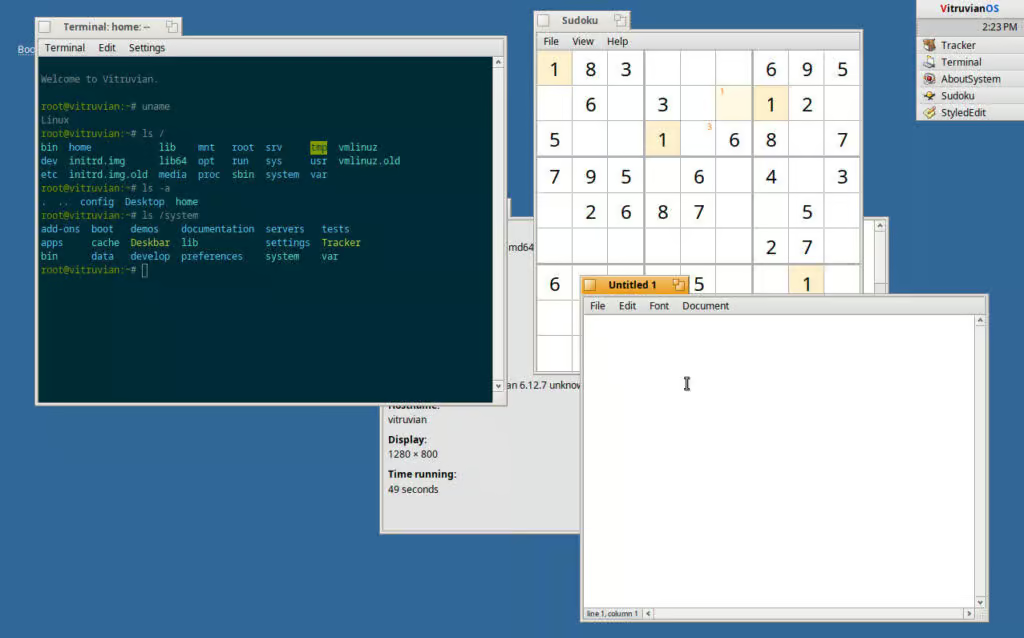
One of the core technologies behind this architecture is Nexus, an internal communication framework responsible for handling messaging between different system components.
The desktop environment itself reflects strong BeOS influences, featuring elements such as a Deskbar and a file manager similar to Tracker. Additionally, VitruvianOS includes a compatibility layer designed to support applications built for Haiku and BeOS APIs.
On the technical side, the system runs on a Linux kernel enhanced with real-time patches. It currently supports filesystems like XFS and SquashFS, along with extended attributes.
Looking ahead, the developers have shared a short-term roadmap. Version 0.3.1 will focus on fixing bugs and adding missing features identified during early testing. Version 0.3.2 is expected to move toward self-hosting, allowing the system to compile and build itself.
Further down the line, version 0.4 will prioritize stability improvements and expanded hardware compatibility, including continued work on ARM support. Additional enhancements are planned for input handling, a full keymap system, and overall user interface improvements.
For more information, refer to the official project announcement.
add a comment

Canonical Plans Controversial GRUB Changes for Ubuntu 26.10 Secure Boot
Canonical is considering a significant overhaul to how Secure Boot works in Ubuntu 26.10, with a proposal aimed at reducing...
Tails 7.6 Introduces Automatic Tor Bridges to Bypass Censorship
Tails 7.6 has been released, bringing a new update to the privacy-focused Linux distribution that routes all internet traffic through...
LibreOffice 26.2.2 Released With Over 100 Bug Fixes Across Writer, Calc, and Impress
The Document Foundation has rolled out LibreOffice 26.2.2, marking the second maintenance release in the 26.2 series that debuted earlier...
17 Best Free and Open Source Linux File Managers in 2026
Introduction File management is one of those tasks that every computer user does every single day — yet the quality of the tool you use for it varies enormously. On Linux, the ecosystem of file managers is richer and more diverse than on any other operating system. Where Windows users get File Explorer and macOS users get Finder, Linux users get to choose from dozens of well-maintained, feature-rich, genuinely different tools — each with its own philosophy, design language, and target audience. That diversity is both a strength and a...