
13views

Today we’re going to be going through the steps of configuring SSO across the VCF components and integrating with Active Directory.
First, log into VCF Operations and browse to Fleet Management / Identity and Access, then select your VCF Instance.
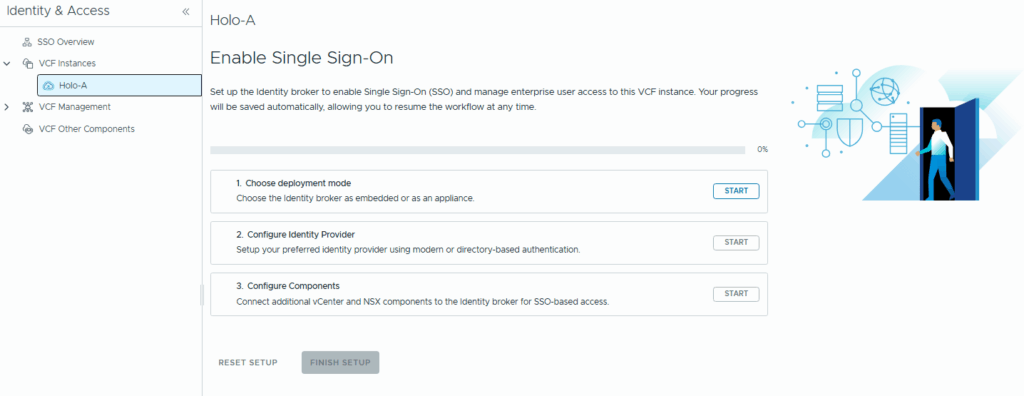
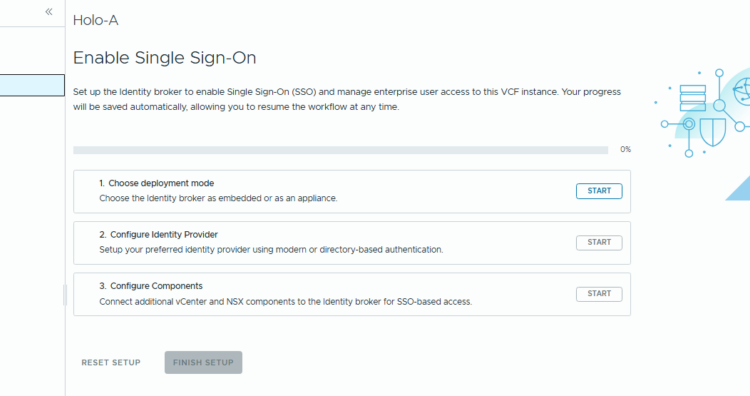
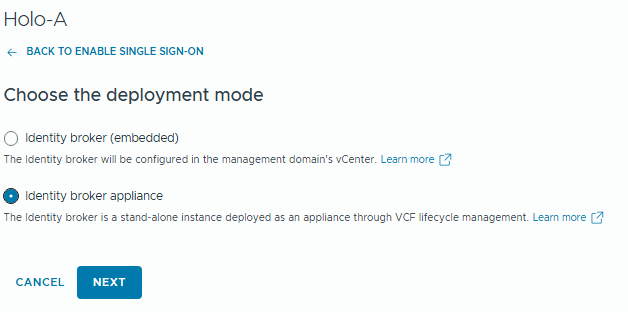
Step 1: Choose Deployment Mode – Click “Start” and we’ll select Identity Broker Appliance. If you haven’t already deployed this, you’ll be prompted to.
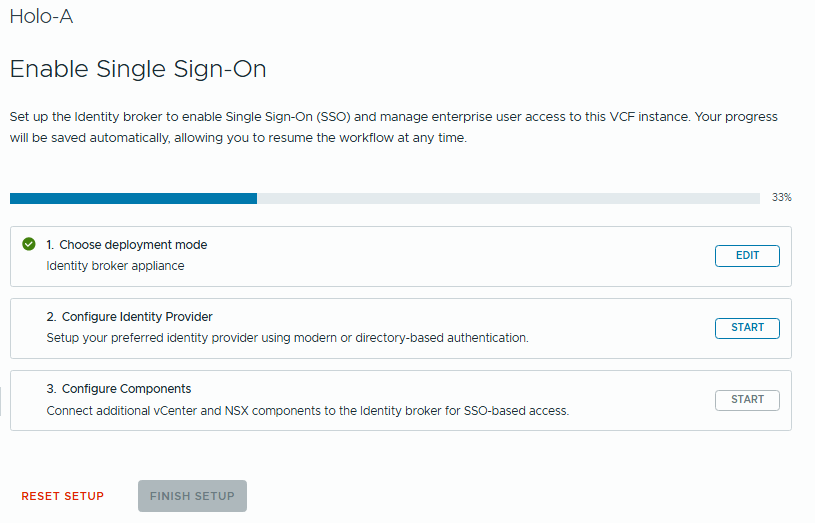
Step 2: Configure Identity Provider, click “Start”
We’ll be using AD, but VCF 9 now supports modern identity providers such as Ping/Okta/Entra.
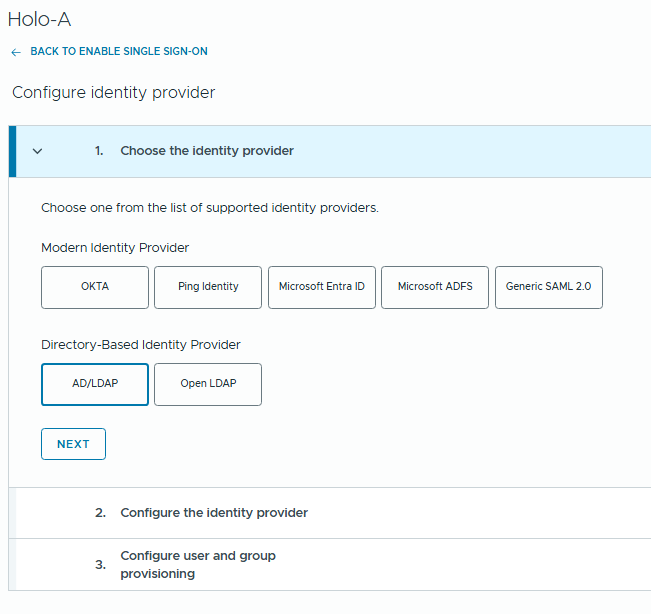
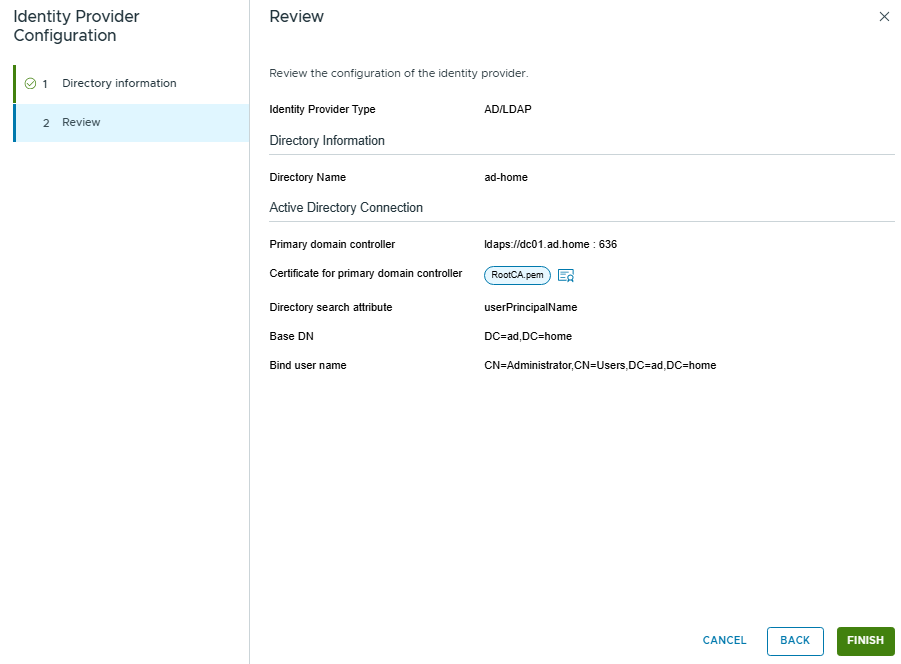
Configure with your AD Details. My domain is called “ad.home” and I’m binding with the built-in AD Administrator account.
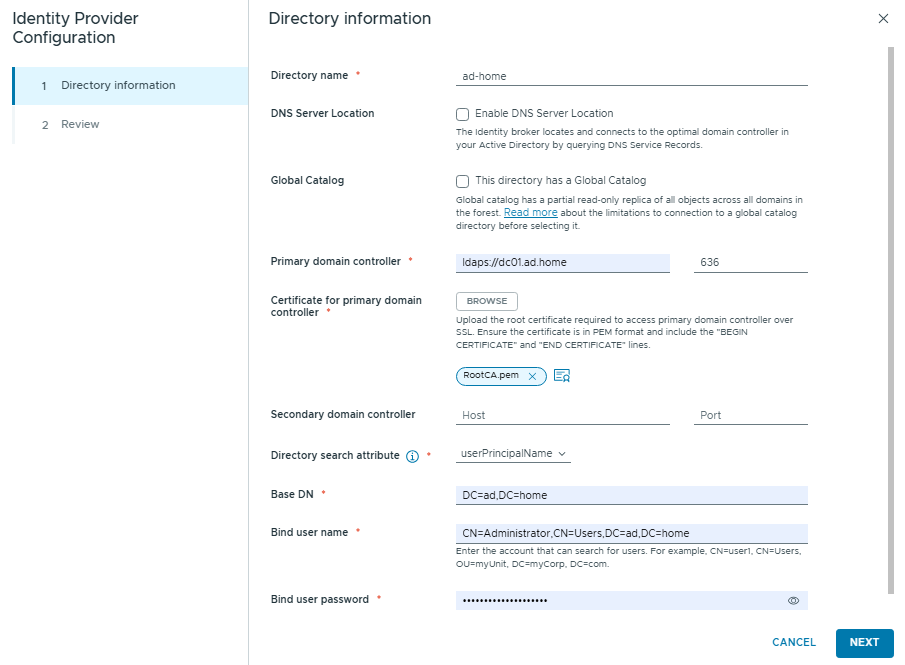
Review and click “Finish”
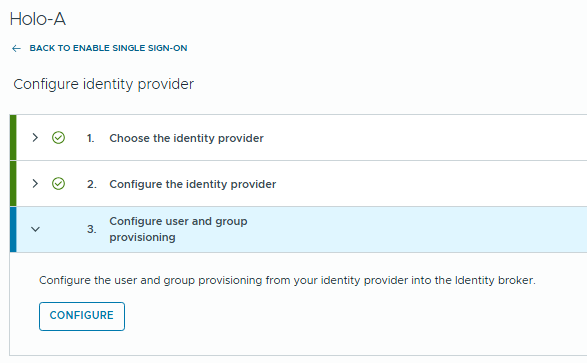
Step 3: Configure User and Group Provisioning – Click “Configure”
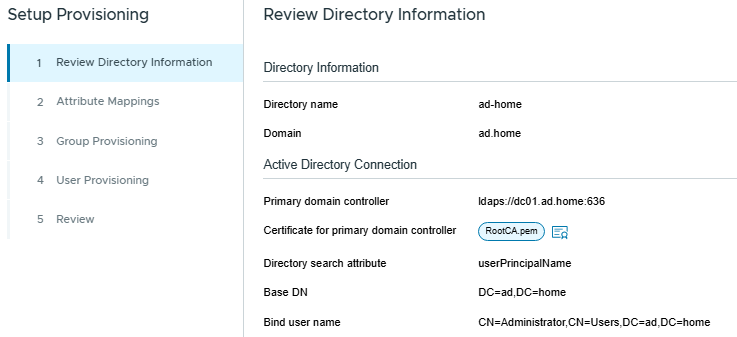
Review the attribute mappings
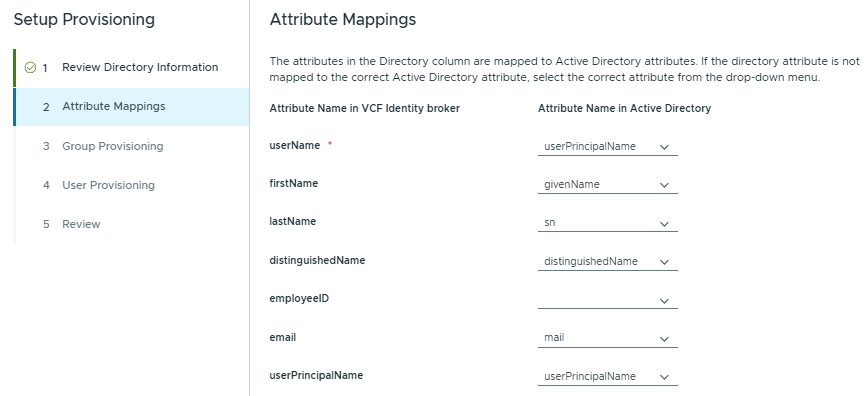
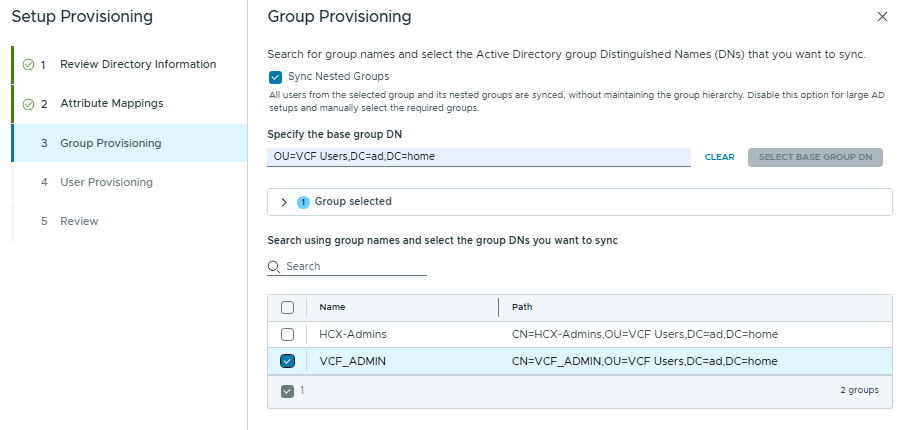
I’m going to select my VCF_ADMIN group thats in the “VCF Users” OU
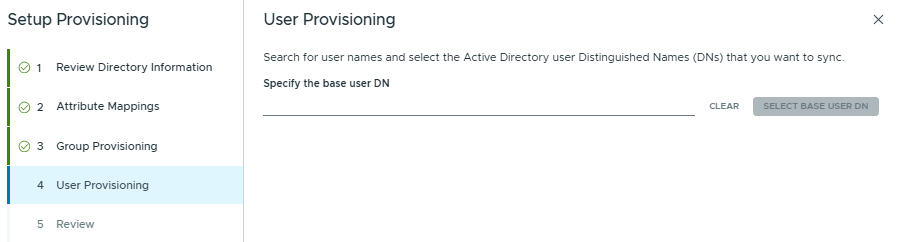
I’m not going to provision any users, as it’s best practice to control access via groups instead.
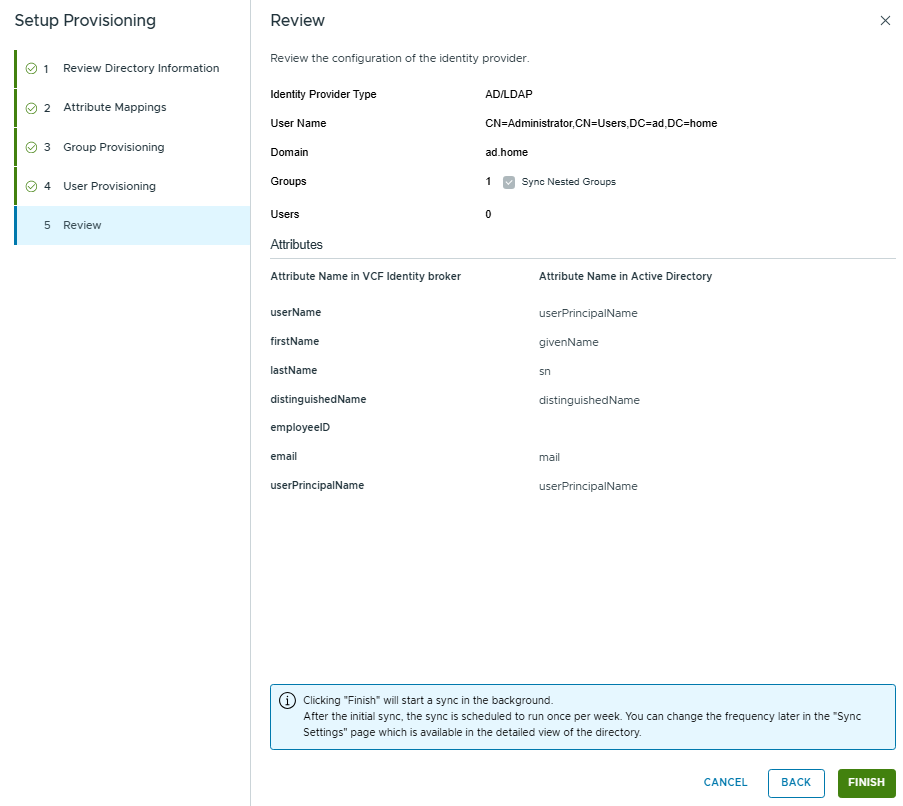
Review and Finish
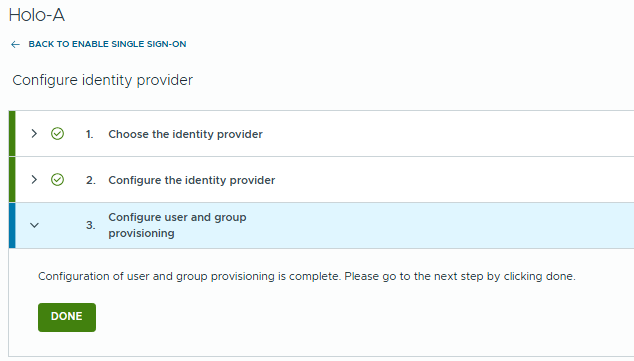
Once complete, click Done.
We’ll pick up in Part 2 for the NSX & vCenter role mappings.
add a comment

VCF 9 – Enable and Configure SSO Part 2 (vCenter / NSX)
In Part 1, I showed how to connect the Identity Broker to your Active Directory. In Part 2 we’ll be configuring the role mappings in vCenter and NSX. First, we need to link the products to the SSO Provider. Click “Edit” and we can select the NSX Manager and vCenters to enable. Note the warning at the top regarding ELM. Enhanced Linked Mode is going away in VCF 9, and there will be a procedure to unlink your vCenters for Brownfield environments. When you click configure you’ll get a warning....
VCF 9.0.2 Upgrade/Patching Process
VCF 9.0.2 has just been released, in this blog post, we’ll show how to upgrade your 9.x environment to 9.0.2 First step is always to read the release notes, this will detail new features, bug fixes and any caveats with the update. Now make sure you have your depot configured, and we can start the process. The management layer will be upgraded first. We’ll begin with the “Fleet Management” appliance. This can be equated to the Aria Lifecycle component in VCF 5.x, we need to upgrade this first so it...
VMware vSphere 8.0U3i Download
The release of vSphere 8 from VMware brings several focused improvements aimed at scalability, hardware flexibility, and security. While many...

VMware Workstation & Fusion 25H2u1 Updates
If you're a virtualization professional, lab builder, or anyone working with VMware products, you’ll want to know about the latest...
