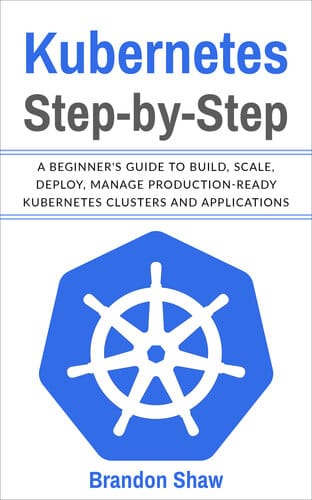
This book is designed to help beginners understand the key concepts and workflows related to Kubernetes and guide them through the process of building and managing production-ready Kubernetes clusters and applications.
Kubernetes Step-by-Step: A Beginner’s Guide to Build, Scale, Deploy, Manage Production-Ready Kubernetes Clusters and Applications” by Brandon Shaw is a comprehensive guide aimed at beginners who want to understand how to work with Kubernetes. This book breaks down the complex concepts of Kubernetes into easy-to-understand steps and provides practical examples for building and managing scalable and production-ready clusters.
Here are some key aspects that the book covers:
Key Concepts:
Kubernetes Basics:
Introduction to Kubernetes architecture and its components (such as nodes, pods, and clusters).
Explanation of how Kubernetes orchestrates containers to run scalable, distributed applications.
Cluster Setup and Configuration:
Guidance on setting up a Kubernetes cluster from scratch.
Various tools and methods to deploy a Kubernetes cluster, such as using cloud services or local setups like Minikube.
Managing Pods and Deployments:
Detailed steps on deploying and managing containers with Kubernetes, including how to scale applications and ensure high availability.
Introduction to important concepts like Deployments, ReplicaSets, and StatefulSets.
Scaling Applications:
Techniques for scaling applications in Kubernetes, both horizontally and vertically.
Using Kubernetes features like auto-scaling for efficient resource management.
Networking and Service Discovery:
How Kubernetes handles networking between services and pods.
Exposing applications via services (e.g., LoadBalancer, ClusterIP, NodePort).
Storage in Kubernetes:
Explanation of how persistent storage is handled in Kubernetes using Persistent Volumes (PVs) and Persistent Volume Claims (PVCs).
Integration with various storage solutions.
Security and Monitoring:
Best practices for securing Kubernetes clusters.
How to monitor the health and performance of applications and clusters.
Managing Configurations and Secrets:
How Kubernetes handles configurations, secrets, and environment variables using ConfigMaps and Secrets.
CI/CD Integration:
Implementing Continuous Integration/Continuous Deployment pipelines with Kubernetes.
Automating deployment processes with Kubernetes and popular CI/CD tools.
Advanced Topics:
Exploring advanced Kubernetes features like Helm (for package management), namespaces, and resource limits.
Learning Approach:
Step-by-Step Instructions: The book provides clear, hands-on examples that guide the reader through each topic, making complex concepts more approachable.
Real-World Examples: The book uses practical examples to show how to use Kubernetes in real-world scenarios, making it ideal for developers and system administrators looking to deploy and manage applications in production.
Easy to Follow: Written in a beginner-friendly manner, even those with little prior experience with Kubernetes or containerization can follow along.