

466views
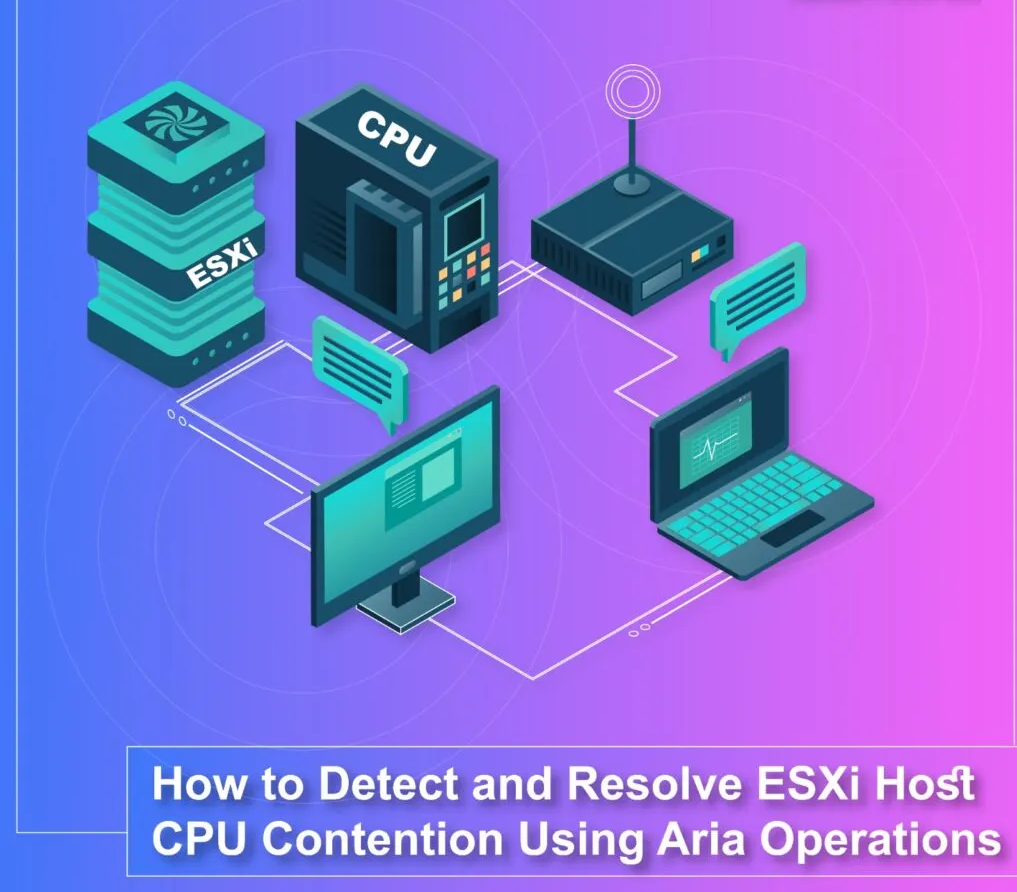
ESXi Host CPU Contention in Aria Operations (formerly vRealize Operations) refers to situations where multiple virtual machines (VMs) on an ESXi host are competing for CPU resources, and the demand exceeds what the host can provide. Aria Operations helps you monitor, identify, and resolve such contention issues to ensure optimal performance of your virtual infrastructure.
What is CPU Contention in VMware ESXi?
CPU contention happens when:
- Multiple VMs request more CPU cycles than the host’s physical CPUs (pCPUs) can deliver.
- The hypervisor (ESXi) has to schedule and share limited CPU resources among many VMs.
- This leads to performance degradation in affected VMs, typically seen as latency or slow response times.
How Aria Operations Monitors CPU Contention?
Aria Operations uses a combination of metrics, symptoms, and alerts to detect CPU contention. Key metrics include:
| Metric | Description |
| CPU Contention % | Measures how much time a VM or host spends waiting for CPU resources. |
| CPU Ready Time | Time a VM is ready to run but is waiting for CPU scheduling. |
| Co-Stop Time | Time vCPUs of a VM wait to execute in parallel (important for SMP VMs). |
| Demand vs Usage | High demand with low usage can indicate contention or limits imposed. |
How to Detect and Resolve ESXi Host CPU Contention Using Aria Operations
Indicators of Host-Level CPU Contention
At the ESXi host level, Aria Operations might show:
- CPU Contention % > 2-5% — signs of moderate contention.
- CPU Ready Time significantly higher than normal.
- Multiple VMs with high demand running on a host with limited CPU headroom.
- Host CPU Usage consistently over 85-90%.
Troubleshooting with Aria Operations
- Heat Maps & Dashboards
Use CPU-related heatmaps to identify which hosts or clusters are oversubscribed. - Alerts & Symptoms
Aria Operations generates alerts like:- “High CPU Contention on Host”
- “Virtual Machine experiencing high CPU Ready Time”
- “CPU Demand exceeds capacity”
- Drill Down into VM Metrics
Identify top consumers of CPU resources and determine if rightsizing is needed. - Capacity Planning
Forecast CPU needs and determine if more capacity is required or if load balancing can help.
Also Read: Management Options in Advanced VMware ESXi Administration
Best Practices to Resolve CPU Contention
- VM Rightsizing: Ensure vCPUs match actual workload needs.
- DRS Optimization: Enable VMware DRS to automatically balance VM workloads across hosts.
- Resource Pools & Limits: Avoid overly restrictive CPU limits or reservations.
- Spread out high-CPU VMs across hosts/clusters.
- Monitor Co-Stop: For SMP VMs, consider reducing vCPU count if co-stop is high.
Final Thoughts
CPU contention on ESXi hosts can seriously impact performance, and Aria Operations provides real-time visibility and historical analytics to detect and resolve these issues. Using its insights, you can proactively manage workloads, prevent performance degradation, and ensure efficient resource usage across your vSphere environment.
FAQ
Q: What causes CPU contention in ESXi hosts?
A: CPU contention happens when virtual machines demand more CPU resources than the physical host can provide.
Q: How can I monitor CPU contention using Aria Operations?
A: You can track CPU contention % and CPU ready time using Aria Operations dashboards, alerts, and custom reports.
Q: What is a high CPU Ready Time in VMware?
A: CPU Ready Time above 5% (or >2000ms per vCPU) is generally considered high and may indicate contention.
Q: How do I fix CPU contention issues in VMware?
A: The fixes include VM rightsizing, enabling DRS, spreading out CPU-heavy VMs, and reducing unnecessary vCPUs.
add a comment

Proxmox Finally Has a Real RVTools-Style Report (This is What Was Missing)
Introduction If you spent any meaningful time in VMware environments, RVTools was likely one of the first utilities you installed...

Download Virtuozzo 9 ISO
Virtuozzo 9 is a powerful enterprise-grade virtualization and cloud platform designed for service providers, hosting companies, and enterprises. It combines...
Check Point R81.20 T634 for VMware
If you're running Check Point environments in production, staying updated with the latest Jumbo Hotfix is critical for security, performance,...

VMware Cloud Director 10.3.3 OVA Download
The VMware Cloud Director-10.3.3 appliance is a ready-to-deploy OVA package that allows users to quickly set up VMware Cloud Director...