



148views
As Jellyfin marks its seventh anniversary, the open-source media server project has unveiled significant changes to its desktop application, signaling a new chapter in its evolution. The January 2026 “State of the Fin” update brings not just a rebrand but substantial technical improvements that promise better performance and user experience for the self-hosted media streaming community.
The Desktop App Gets a New Identity
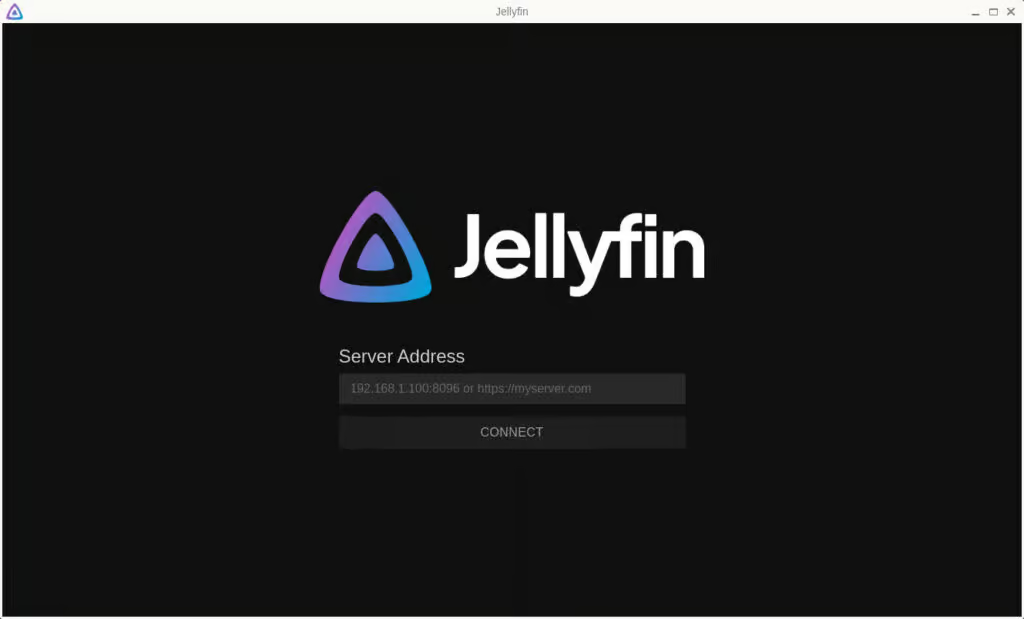
The application formerly known as Jellyfin Media Player has been rebranded as Jellyfin Desktop. While the name change might seem cosmetic, the transformation runs much deeper. The development team has migrated the entire application from Qt 5 to Qt 6, a decision that has already yielded measurable performance gains according to developers working on the project.
This technical overhaul represents a significant investment in the future of the desktop client. Qt 6 brings modern framework capabilities and better resource management, which translates to a smoother streaming experience for users managing their personal media libraries.
Important Considerations for Users
Those upgrading to Jellyfin Desktop should be aware that the new application does not migrate saved servers or settings from its predecessor. This means users will need to reconfigure their server connections and preferences when making the switch. While this may seem inconvenient, it reflects the substantial architectural changes under the hood.
The development team is already planning ahead for improved usability. They have implemented foundational command-line options for profile management, with plans to introduce a graphical interface for easier server switching in future releases. This forward-thinking approach demonstrates the project’s commitment to balancing technical innovation with user convenience.
Platform Availability and Distribution
Linux users can access Jellyfin Desktop immediately through Flathub and the Arch Linux User Repository (AUR). The project recommends Flathub as the primary installation method for most Linux distributions, though additional distribution-specific packages are expected to arrive later.
Windows and macOS users will need to exercise patience, as stable builds for these platforms remain in development. However, one specific Linux distribution faces a unique challenge: Ubuntu 24.04 LTS users cannot currently run Jellyfin Desktop due to the distribution’s Qt stack being locked at version 6.4. The new client requires Qt 6.5 or newer because of its dependency on mpvqt, making official support impossible until Ubuntu updates its Qt packages.
Looking Ahead: Potential Versioning Changes
Beyond the desktop app changes, Jellyfin’s leadership has initiated discussions about revising the project’s versioning scheme. After the release of version 10.11, internal conversations have explored the possibility of abandoning the “10” series entirely. Under consideration is a jump to version 12.0 for the next major release, which would represent a fresh start in how the project communicates its development milestones.
This potential shift in versioning philosophy reflects a maturing project that is thinking strategically about how it presents itself to users and the broader open-source community.
Why This Matters for Self-Hosted Media
Jellyfin’s continued development and improvement serve as a reminder of the vitality of self-hosted media solutions. In an era dominated by subscription services and corporate streaming platforms, projects like Jellyfin offer users complete control over their media libraries, privacy, and viewing experience.
The move to Qt 6 and the performance improvements it brings are particularly significant for users running Jellyfin on modest hardware or older computers. Better performance means smoother playback, reduced resource consumption, and an overall more responsive interface—all critical factors for a media application that users interact with daily.
The project’s transparency about compatibility limitations, such as the Ubuntu 24.04 situation, also demonstrates a mature approach to software development. Rather than overpromising, the team clearly communicates what works, what doesn’t, and why.
The Road Forward
With seven years of development behind it and major technical improvements now deployed, Jellyfin continues to position itself as a serious alternative to commercial media server solutions. The desktop application relaunch represents more than just a technical upgrade; it symbolizes the project’s commitment to sustained improvement and user-focused development.
For those invested in the self-hosted media ecosystem, these changes signal that Jellyfin remains actively developed and responsive to modern computing standards. The combination of performance enhancements, planned usability improvements, and transparent communication about limitations creates a strong foundation for the project’s next phase.
As the team works toward broader platform support and continues refining the desktop experience, Jellyfin’s seventh anniversary milestone marks not an endpoint but a launching pad for continued innovation in open-source media streaming.
For more information, see Jellyfin’s announcement.
add a comment

Free VPN and Split View Are Coming to Mozilla Firefox
Mozilla is working on upcoming updates to Mozilla Firefox that aim to strengthen privacy protections and improve multitasking capabilities. Two...
System76 Unveils Thelio Mira: Ryzen 9000 Power, RTX 5090 Support & Advanced Cooling
System76 has introduced an updated version of its high-performance desktop, the Thelio Mira, featuring a redesigned chassis aimed at delivering...
KDE Plasma 6.6.3 Released With Dozens of Bug Fixes Across Desktop and KWin
The KDE Project has rolled out Plasma 6.6.3, the third maintenance update in the 6.6 release series. This update primarily...
Bcachefs 1.37 Released With Stable Erasure Coding and Linux 7 Support
Kent Overstreet has introduced Bcachefs 1.37, an advanced copy-on-write filesystem for Linux. It offers modern capabilities such as built-in encryption,...