Physical Address
304 North Cardinal St.
Dorchester Center, MA 02124
Physical Address
304 North Cardinal St.
Dorchester Center, MA 02124


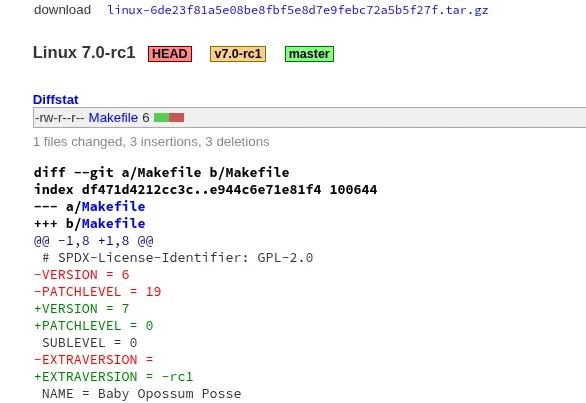
Linus Torvalds has officially closed the merge window with the release of Linux kernel 7.0-rc1. Although the jump to version 7.0 follows Torvalds’ usual habit of incrementing the major version after x.19 releases, this cycle is packed with substantial changes and new functionality.
Beyond the symbolic version bump, Linux 7.0 is shaping up to be a particularly significant release. It is expected to serve as the default kernel for upcoming distributions such as Ubuntu 26.04 LTS and Fedora 44, further raising its profile.

Linux 7.0 expands support for next-generation processors, including Intel’s Nova Lake and Diamond Rapids, along with additional enablement work for AMD’s upcoming Zen 6 architecture. There is also continued upstream progress for non-x86 platforms, such as Qualcomm’s Snapdragon X2.
On the graphics front, the kernel introduces support for new AMD GPUs tied to future hardware releases.
This release delivers a broad set of enhancements across subsystems, including:
Performance tuning is another major focus in Linux 7.0. Highlights include:
The 7.0-rc1 source tree is available via git.kernel.org for those interested in testing.
A detailed feature overview summarizing the most notable changes is expected soon, along with expanded performance benchmarking results for the Linux 7.0 kernel.

We have detected that you are using extensions to block ads. Please support us by disabling these ads blocker.