





pangolin117
17views
Pangolin an open-source, self-hosted identity-based remote access platform that blends a tunneled reverse proxy with zero-trust VPN-style access has released version 1.17.
The standout enhancement in this release is support for multiple roles per user. Previously, each user was limited to a single role, restricting access control flexibility. With this update, administrators can assign multiple roles to a single user, allowing permissions to be combined for more granular and dynamic access management.
In addition, the update improves identity provider role mapping. For auto-provisioned users, administrators can now assign roles through fixed mappings, a new visual mapping builder that converts identity provider group or role IDs into Pangolin roles without requiring code, or advanced configurations using raw JMESPath expressions.
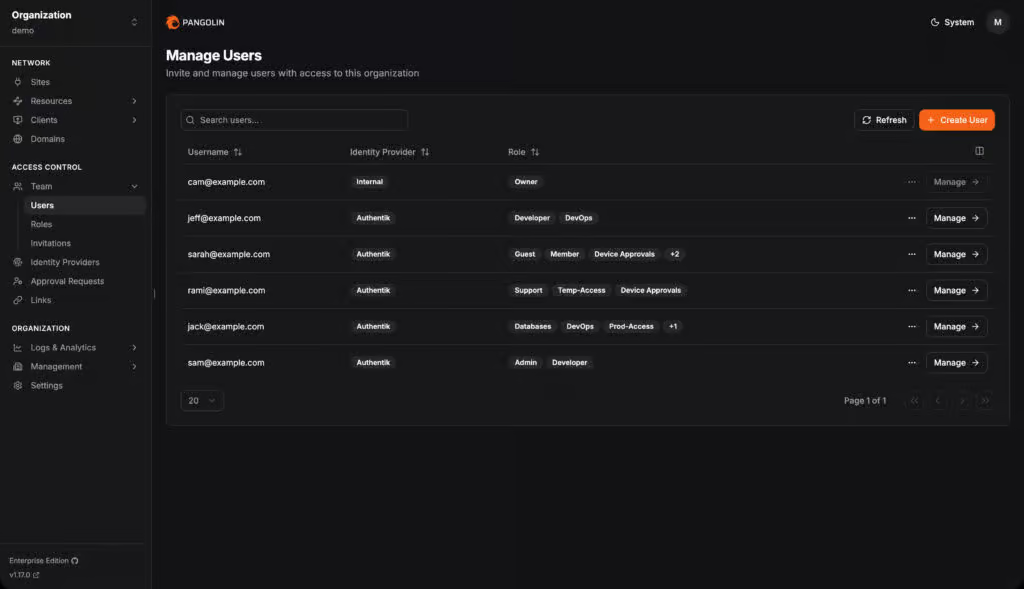
Pangolin 1.17 also introduces built-in templates for Google and Azure identity providers, available at the global server level. For site provisioning, a new approach replaces manually generated credentials with a long-lived token, enabling sites to automatically retrieve their credentials during startup.
Another major addition is the ability to record raw TCP and UDP sessions between clients and private resources. This provides a detailed audit trail, including user activity, session timing, and duration—particularly valuable for zero-trust environments. (Public browser-based resources already include access logging.)
Finally, the release adds log streaming capabilities, allowing administrators to forward events to third-party platforms such as Datadog, Splunk, and Microsoft Sentinel. Users can configure destinations, choose delivery methods like HTTP or S3, and select specific log types for export.
For more details, see the announcement or refer to the changelog.
add a comment


How to Automate Daily Linux Health Checks with a Bash Script + Cron
Introduction Every Linux server runs silently in the background, accumulating usage, filling disks, crashing services, and building up memory pressure...

Pidgin 3.0 Messaging Client Moves from Experimental Build to Alpha
Pidgin—the classic messaging client many users still remember—is very much alive. More than a year after its first experimental 3.0...

Ubuntu 26.04 LTS Raises Desktop Minimum RAM Requirement
According to Canonical’s documentation, the upcoming Ubuntu Desktop 26.04 LTS—set to launch on April 23—will come with higher memory requirements...

Parrot Linux Takes Stand Against Age Verification
Parrot Linux has issued a public statement opposing age verification measures, joining other Linux projects that consider such requirements a...