


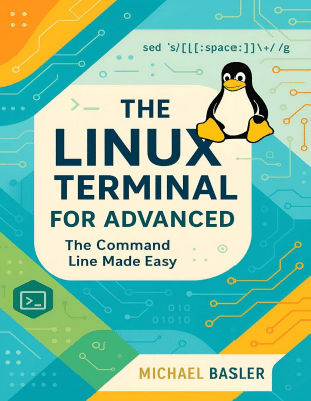
The Linux Terminal
127views
If you’re ready to move beyond basic commands and truly master the Linux command line, The Linux Terminal for Advanced Users is an essential resource. This eBook is designed for learners and professionals who already have foundational knowledge of Linux and want to deepen their expertise in terminal-based workflows.
What this eBook offers:
- Advanced Command-Line Techniques
Learn how to efficiently use powerful Linux commands, chaining, scripting, and automation to streamline complex tasks. - Real-World Use Cases
Explore practical examples that demonstrate how advanced terminal skills are applied in system administration, cybersecurity, and development environments. - Productivity & Efficiency
Discover tips and shortcuts that help you work faster and smarter directly from the terminal. - System-Level Insights
Gain a deeper understanding of how Linux systems operate behind the scenes, empowering you to troubleshoot and optimize performance.
Why You Should Read It
Whether you’re a system administrator, cybersecurity enthusiast, or developer, this book helps bridge the gap between intermediate and advanced Linux usage—turning the terminal into a powerful tool rather than just a basic interface.
Download eBook

File Size 2.7MB
add a comment


PeaZip 11.0 Released With Faster Archive Browsing
Two months after the 10.9 release, PeaZip, a powerful cross-platform open-source file archiver, has introduced version 11.0 with a major...

PacHub is a Sleek GTK4 Frontend for Arch’s Pacman and AUR
PacHub is a modern, open-source application for Arch Linux and Arch-based distributions that brings a clean graphical interface to managing...
Red Hat Launches RHEL Extended Life Cycle Premium With 14-Year Support
Red Hat has launched Red Hat Enterprise Linux Extended Life Cycle Premium, a standalone subscription that extends support for a...

Arch Linux Makes nft the Default Backend for iptables
Arch Linux has announced that iptables now uses the nft backend by default, marking a continued shift in the Linux...