





150views
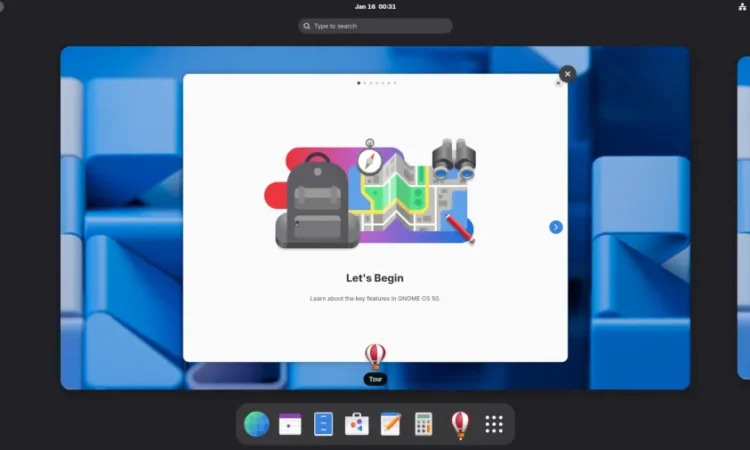
The GNOME Project has officially released GNOME 50 Alpha, marking a significant milestone in the evolution of one of Linux’s most popular desktop environments. This release represents the first unstable version leading to the GNOME 50 series, with the stable release scheduled for March 18, 2026. The alpha build introduces fundamental architectural changes, most notably the complete removal of X11 session support across multiple core components.
Major Architectural Changes: The Wayland-Only Transition
Complete X11 Backend Removal
The most significant change in GNOME 50 Alpha is the removal of X11 support from critical components. GNOME Mutter has removed the X11 back-end support, officially ending X11 session support while maintaining XWayland compatibility for X11 applications and games. This change affects several core components:
GDM (GNOME Display Manager): GDM has “entirely removed” its X11 support, with one critical exception—users can still launch X11 sessions from other desktop environments using a per-user X server. This means system-wide features like XDCMP are no longer available, and all GNOME sessions will exclusively run on Wayland.
GNOME Shell and Mutter: Both components have been updated to function exclusively with Wayland backends, eliminating legacy X11 code paths that have been maintained for compatibility purposes.
GNOME Control Center: The settings application has also removed X11-specific configurations, streamlining the codebase for Wayland-first development.
XWayland Support Remains
Despite the removal of native X11 support, GNOME 50 maintains full XWayland compatibility. This ensures that existing X11 applications—including legacy software, games, and specialized tools—will continue to function seamlessly within the Wayland environment. Users won’t need to abandon their favorite applications during this transition.
Key New Features and Improvements
1. Session Save and Restore Functionality
GNOME 50 Alpha introduces initial support for session save and restore, a highly requested feature from the community. When enabled through gsettings, running applications will be saved at logout and restored on the next login. While still in early implementation, this feature promises to significantly improve workflow continuity for users.
2. Headless Session Support
GDM now includes a new [email protected] service that simplifies starting headless graphical sessions, particularly beneficial for remote desktop protocol (RDP) deployments and server environments where graphical sessions are needed without physical displays.
3. Week Start Day Configuration
GNOME 50 Alpha added support for configuring the first day of the week, addressing regional preferences where Monday (used in most of Europe and China) or Sunday (common in North America) serves as the week’s beginning. This can be configured using gsettings commands.
4. Enhanced Nautilus (Files) Performance
The file manager has received substantial performance optimizations:
- Improved Thumbnail Loading: Nautilus now features improved thumbnail loading through a new custom widget, significantly reducing load times for directories with numerous images and videos.
- Memory Usage Optimization: Reduced RAM consumption, especially beneficial for systems with limited resources.
- Multiple File Type Search Filters: Enhanced search capabilities allowing users to filter by multiple file types simultaneously.
- Revamped Batch Rename: A more intuitive interface for renaming multiple files.
5. GNOME Calendar Enhancements
The calendar application received improved animations, performance enhancements, and fixes for dozens of memory leaks, resulting in a more responsive and stable experience.
6. Graphics and Image Handling Improvements
Glycin Library Updates: The Rust-based Glycin library added XBM and XPM image loading support, expanding compatibility with legacy image formats while maintaining security through memory-safe Rust implementation.
gdk-pixbuf Enhancements: Support for compressed SVGZ images and AVIF image saving has been integrated, providing better compression and modern format support.
GTK 4.21.4: GTK now includes GtkSvg as a much more complete SVG renderer, improving vector graphics display across GNOME applications.
7. GNOME Builder (IDE) Improvements
GNOME Foundry received major infrastructure improvements for IDE development and a complete debugger implementation, enhancing the development experience for software engineers working within the GNOME ecosystem.
8. Control Center Accessibility Features
GNOME Control Center has undergone numerous enhancements:
- Improved color calibration workflows
- Multiple new accessibility features for users with disabilities
- Enhanced keyboard modifier page with better translation support
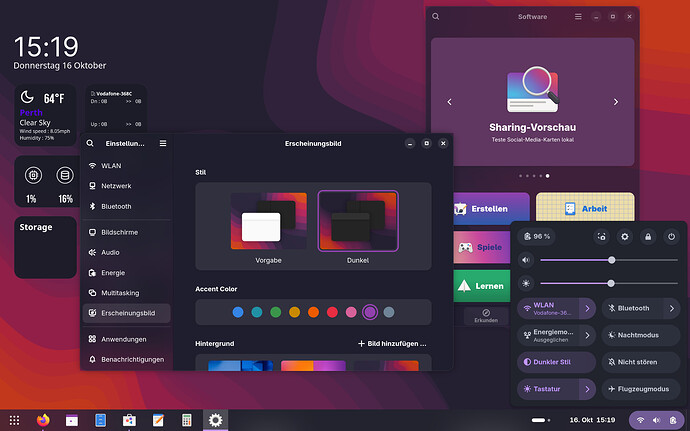
- New multitasking panel with Save/Restore toggle switches
Hardware and Performance Optimizations
NVIDIA Hardware Support
GNOME 50 promises to improve eager suspend after resume with NVIDIA hardware, addressing long-standing issues with power management on systems using NVIDIA GPUs.
Display and Monitor Handling
Mutter 50 alpha ships with improvements to tiled monitor and sticky keys handling, native Xwayland scaling support, and support for tablet devices. Additionally, the display server now supports:
- Secondary GPU performance improvements
- RGBA16, RGBX16, and XB48 color formats
- External window constraints
- CRTC KMS color properties for better color accuracy
Ambient Light Sensor Integration
Enhanced ambient light sensor handling provides more responsive automatic brightness adjustments based on environmental lighting conditions.
Conclusion
GNOME 50 Alpha represents a bold step forward in desktop Linux evolution. By fully committing to Wayland, the GNOME Project positions itself at the forefront of modern display server technology while maintaining backward compatibility through XWayland support.
The removal of X11 support simplifies the codebase, allowing developers to focus on innovation rather than maintaining legacy infrastructure. Combined with performance improvements, new features like session restoration, and enhanced hardware support, GNOME 50 promises a more refined, secure, and performant desktop experience.
For the broader Linux community, this release signals accelerating momentum in the Wayland migration. As major desktop environments coordinate their transitions, users can expect improved consistency, better hardware support, and enhanced security across the Linux desktop ecosystem.
Read Also about GNOME 49 Launches With New Apps, Nautilus Redesign, and GNOME Shell Upgrades
add a comment


8 Ubuntu Terminal Tools You Must Master in 2026
Introduction1. micro — The Terminal Editor With Zero Learning Curve2. Neovim — IDE-Level Terminal Editing When You Are Ready3. tmux...
Canonical Plans Controversial GRUB Changes for Ubuntu 26.10 Secure Boot
Canonical is considering a significant overhaul to how Secure Boot works in Ubuntu 26.10, with a proposal aimed at reducing...
Tails 7.6 Introduces Automatic Tor Bridges to Bypass Censorship
Tails 7.6 has been released, bringing a new update to the privacy-focused Linux distribution that routes all internet traffic through...
LibreOffice 26.2.2 Released With Over 100 Bug Fixes Across Writer, Calc, and Impress
The Document Foundation has rolled out LibreOffice 26.2.2, marking the second maintenance release in the 26.2 series that debuted earlier...