Physical Address
304 North Cardinal St.
Dorchester Center, MA 02124
Physical Address
304 North Cardinal St.
Dorchester Center, MA 02124

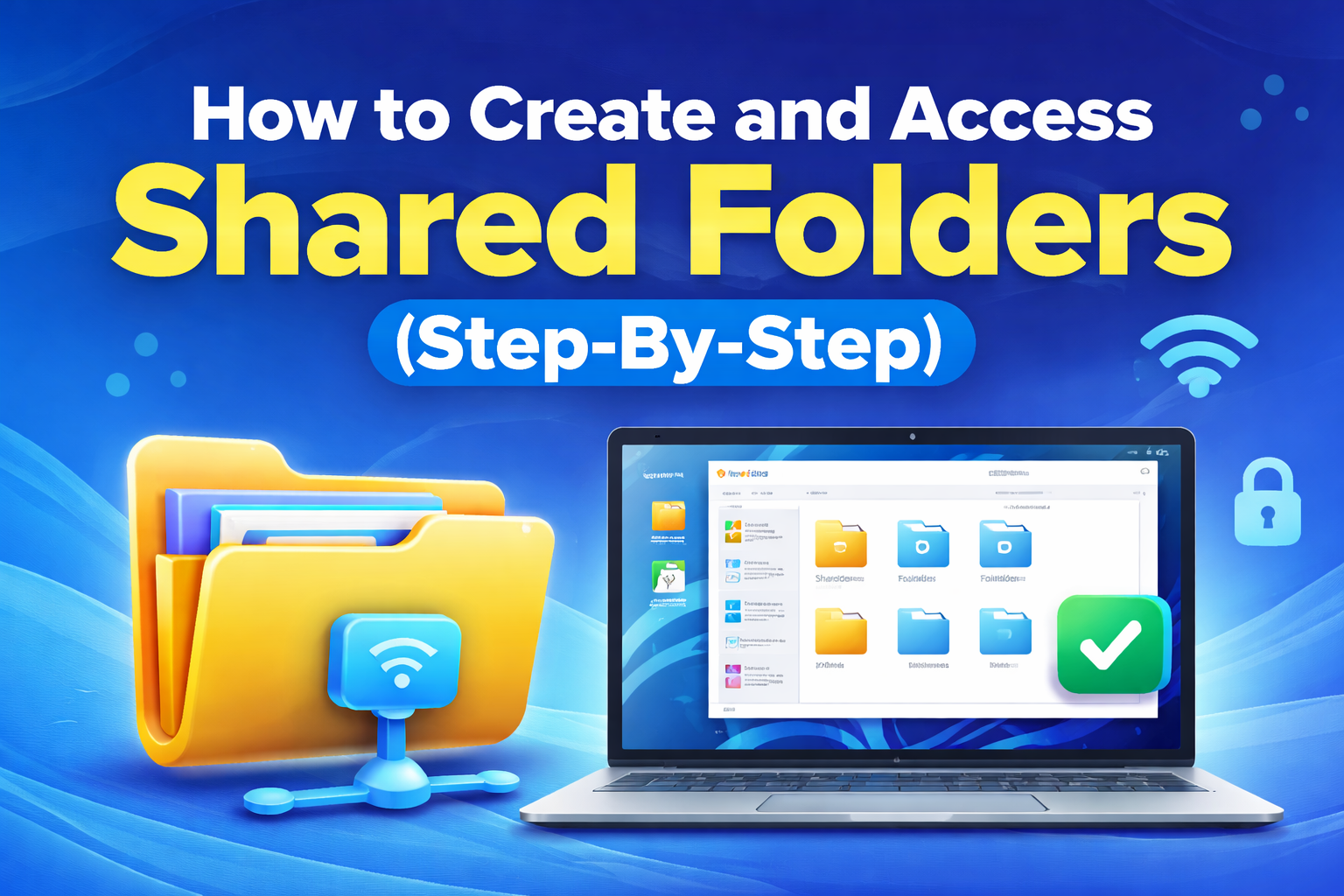
Windows file sharing allows any Windows PC to host a file share, making files available to other computers on the same network. Better still, files located within the shared folder are not solely accessible to Windows devices. Apple devices running MacOS can also access the shared folder, as can Linux devices, so long as those devices are operating on the same network.
Some organizations use this type of file sharing as an alternative to deploying Network Attached Storage (NAS). The shared folder essentially functions as a NAS, allowing authorized users to centrally store and transfer files.

The exact method used for sharing files varies slightly depending on the operating system version that is being used. As an example, the steps used for creating a shared folder on a Windows 10 device are a little bit different from those used by Windows 11
. The process can also vary depending on whether or not the computer that is hosting the share is domain joined.
To share files using a Windows 11 PC, you will need to begin by creating a folder that will act as a network share. To do so:
When you do, Windows will ask you who you want to share the folder with. Assuming that the machine is not domain joined, you will only be able to share the folder with those who have a local account on the PC (you can create additional local accounts if necessary).

Windows file sharing: Click the Share button to share the folder.
At this point, the newly created share is ready to use. However, you can gain more fine-grained control over the sharing process.

The Advanced Sharing screen gives you more fine-grained control over the Windows file sharing process.
The first of these options is the Share This Folder checkbox. You can enable or disable the network share by selecting or deselecting this checkbox.
The next option allows you to configure the share name. By default, the share name is the same as the folder name. However, the interface includes an Add and Remove button that you can do to create additional share names or to remove unwanted names.
Just beneath the Share Name option, you will find an option to specify the number of simultaneous users. This setting controls how many different users or devices can access the shared folder at the same time. By default, the limit is set to 20, but you can adjust this value up or down depending on your needs. Keep in mind that allowing too many people to access the share at once can diminish the PC’s performance.
The Advanced Sharing dialog box also contains a Comments section. While you do not necessarily have to enter comments, it is a good idea to use the Comments field as a tool for documenting why the share was created, what data resides within the shared folder, and who can access the share.
Clicking the Permissions button allows you to grant permissions to individual user accounts, thereby allowing them to access the share. For each user account, you can grant full control, change, or read access to the folder.
Full Control allows designated user accounts to create and delete files within the folder, while the Change permission allows the user to modify files. Read permissions allow a user to access files. While the Share This Folder screen also allows you to set permissions, this screen tends to be more flexible, granting granular access to specific people.
| Share Permission | What it Allows | What it Does Not Allow | Typical Use Case |
|---|---|---|---|
| Read | • View folder contents • Open files • Read file data and attributes | • Create new files or folders • Modify existing files • Delete files or folders • Change permissions | Public or reference-only shares where users should only view content |
| Change | • Read files and folders • Create new files and folders • Modify existing files • Delete files and folders | • Change share permissions • Take ownership of files or folders | Team collaboration shares where users need to work with files but not manage security |
| Full Control | • All Read and Change capabilities • Change share permissions • Take ownership of files and folders | • Nothing at the share level (full access) | Administrators or trusted owners responsible for managing the share |
Windows file sharing advanced sharing permissions
Share permissions do not apply when a user accesses the folder locally on the same machine. Local access is controlled only by NTFS permissions.
The Caching setting controls whether or not items from the shared folder should be available for offline use.
Once you have created a shared folder, then the next step in the process is to access the share from nearby devices. Once again, the technique that is used will vary depending on the operating system that is installed on the client device. Microsoft Windows
devices for example, will access the share in a different manner from those who are using an Apple device such as an iPhone or a device that is running MacOS. Similarly, Linux users will also have to
There are two main options for accessing a Windows File Share from a Microsoft Windows device. You can access the share directly, or you can map a network drive.
To access a file share from a Windows PC:

You can access a share through its Universal Naming Convention (UNC) path.
The other option is to map a network drive.
The first thing that you will need to do is to select the drive letter that you want to use. Next, you will need to specify the shared folder. You can do this by manually entering the folder name and the share name as you would if you were manually connecting to the share. As an alternative however, you can click the Browse button. Doing so will cause Windows to search the private network for any nearby shares.
The Map Network Drive dialog box also contains a checkbox that you can select if you want to reconnect the mapped drive at logon and another checkbox that you can use to connect to the share using an alternate set of credentials.

You can access a shared folder through a mapped network drive.
Although the process of creating and connecting to a shared folder is usually straightforward, things occasionally go wrong.
One of the most common issues is that the Windows Firewall is blocking inbound connections. At a minimum, you will need to openTCP Port 445, which allows Server Message Block (SMB) traffic. A Windows file share is essentially an SMB share, and so SMB traffic must be able to pass through the Windows Firewall.

The Windows Firewall must be configured to allow inbound SMB traffic on TCP port 445.
Another potential problem is that the client device may not recognize the computername of the machine that is hosting the shared folder. If you suspect that this is the problem, then you can try accessing the share by entering a double backslash, the host computer’s IP address, another backslash, and the sharename.
An IP address can be used in situations where the computername cannot be resolved. If computernames are not being recognized, then be sure that NetBIOS Name Service traffic is allowed by the firewall. It uses UDP Port 137. Opening the TCP 139 and UDP 138 ports can also sometimes help.
If you are using Wi-Fi, then make sure that the firewall that is built into your router is not blocking the various ports used by Windows filesharing. This is especially important if you are on a home network, as some Wi-Fi routers block these ports by default.
Access to a fileshare can also fail if the computer that is hosting the share is located on a different network. That being the case, make sure that the host computer and the client computer are both located on the same local network.

We have detected that you are using extensions to block ads. Please support us by disabling these ads blocker.