Physical Address
304 North Cardinal St.
Dorchester Center, MA 02124
Physical Address
304 North Cardinal St.
Dorchester Center, MA 02124
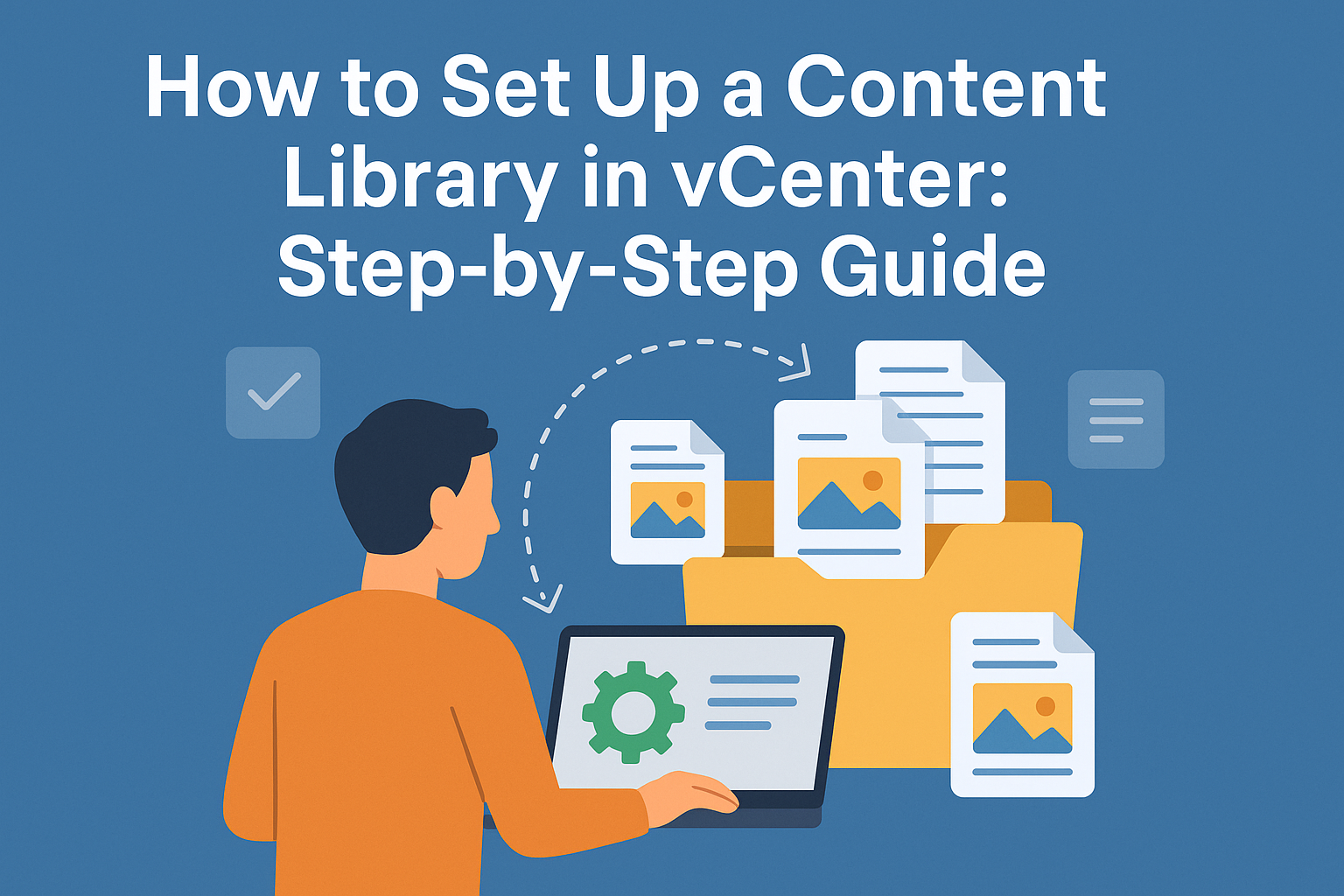
Managing VM templates, ISO images, scripts, and OVF files efficiently is crucial in any virtualized environment. VMware vCenter’s Content Library simplifies this task by allowing you to centralize, organize, and distribute content across multiple vCenter Server instances. Whether you’re working in a single datacenter or across multiple sites, a content library helps you maintain consistency and save storage.
In this comprehensive guide, we’ll cover:
💡 Read Also: Creating Multiple VMs in ESXi Using Terraform
A Content Library in vCenter is a repository to manage and share VM templates, ISO files, scripts, and other files. Libraries can be local (specific to one vCenter) or subscribed (connected to another published library).
Key features include:
✅ Tip: Use meaningful names like Prod_VM_Templates_Library for clarity.
Once your library is created, you can populate it with various types of content:
📌 Files stored in content libraries are versioned and can be updated or replaced.
Publishing allows other vCenter Servers to subscribe and sync content:
https://<vcenter>/cls/<library-ID>).🔐 If you’re publishing over HTTPS, ensure vCenter’s certificate is trusted by subscribers.
To consume content from a published library:
🌐 Note: Ensure network connectivity between the subscribing vCenter and the published library.
To subscribe, you need the URL of the published library:
You can now deploy VMs, clone templates, or mount ISOs directly from this library.
Setting up a Content Library in vCenter helps streamline content management across your virtual infrastructure. It promotes efficiency, reduces duplication, and ensures consistent deployments.
SEO Keywords Covered:

We have detected that you are using extensions to block ads. Please support us by disabling these ads blocker.