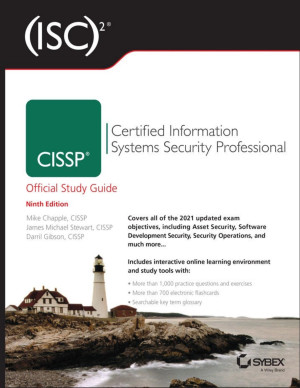
The CISSP Certified Information Systems Security Professional Official Study Guide by Mike Chapple, James Michael Stewart, and Darril Gibson is a premier resource for individuals preparing for the highly respected CISSP certification exam. It provides comprehensive coverage of the eight domains outlined in the (ISC)² Common Body of Knowledge (CBK), focusing on equipping candidates with the knowledge and skills required to excel in the exam and their cybersecurity careers.
Overview of the Study Guide
This study guide offers a structured approach to mastering complex cybersecurity concepts, with real-world examples, exam-focused content, and practical advice. It balances theory and application, making it valuable for both exam preparation and professional reference.
Key Features
Comprehensive Domain Coverage: Detailed chapters cover each of the eight CISSP domains:
Security and Risk Management
Asset Security
Security Architecture and Engineering
Communication and Network Security
Identity and Access Management (IAM)
Security Assessment and Testing
Security Operations
Software Development Security
Exam Tips and Tricks: Insightful strategies for answering different types of questions on the CISSP exam.
Hands-On Examples: Practical scenarios that illustrate how cybersecurity principles are applied in real-world situations.
Practice Questions and Quizzes: Each chapter concludes with questions to test your understanding.
Online Learning Resources: Access to additional practice exams, electronic flashcards, and an online glossary to reinforce learning.
Detailed Discussion of the CISSP Domains
1. Security and Risk Management
Principles of security governance
Legal, regulatory, and compliance frameworks
Risk analysis and management techniques
Policies, standards, and guidelines
2. Asset Security
Data classification and handling
Retention policies and secure data management
Privacy principles and practices
3. Security Architecture and Engineering
Secure design principles for systems and software
Cryptographic methods and applications
Vulnerability and resilience planning
4. Communication and Network Security
Network architecture and design
Secure network protocols and services
Network attack mitigation
5. Identity and Access Management (IAM)
Access control systems and methods
Authentication mechanisms
Federated identity and single sign-on (SSO)
6. Security Assessment and Testing
Security control testing and auditing
Vulnerability assessment techniques
Penetration testing methodologies
7. Security Operations
Incident response and forensic investigation
Disaster recovery and business continuity planning
Operational resilience strategies
8. Software Development Security
Secure software development lifecycle (SDLC)
Software vulnerability analysis
Secure coding practices
(ISC)2 CISSP Certified Information Systems Security Professional Official Study Guide 2